John McCarthy
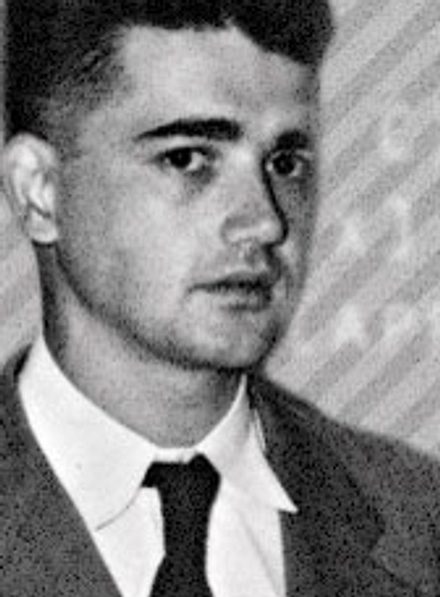
John McCarthy (1927–2011), early in his career. Photo via John McCarthy’s Stanford home page.
Every field needs someone willing to name it — and then to spend a lifetime insisting the name means something specific. For artificial intelligence, that person was John McCarthy (1927–2011). An American computer scientist of unusual range and stubbornness, he did more than almost anyone to argue that “thinking” was a subject for engineers and not only for philosophers.
McCarthy spent most of his career at Stanford University, where he founded and led the Stanford Artificial Intelligence Laboratory (SAIL). Before that he had passed through MIT — where he helped start another storied AI lab — as well as Dartmouth College and Princeton. In 1971 he received the Turing Award, computing’s highest honor, for his work on artificial intelligence. But his most lasting contributions are not medals; they are a phrase, a meeting, a programming language, and an argument that the field is still having.
Coining the term “Artificial Intelligence”
The phrase artificial intelligence was McCarthy’s. He wrote it down in 1955, in the proposal for a research project to be held the following summer, and he chose the words with care. Part of the point was territorial: he wanted to mark off the new effort from neighboring fields such as cybernetics and automata theory. But the deeper point was ambition. The name did not describe a technique; it named a goal — building machines that could do the things we call intelligent when a person does them.
It was, in hindsight, a shrewd act of framing. A vaguer label might have let the work dissolve back into mathematics or engineering. “Artificial intelligence” kept the hard question in view.
The Dartmouth Conference (1956)
In the summer of 1956, McCarthy convened the Dartmouth Summer Research Project on Artificial Intelligence alongside Marvin Minsky, Nathaniel Rochester, and Claude Shannon. The proposal behind it advanced a claim that still sets the terms of the debate:
Every aspect of learning or any other feature of intelligence can in principle be so precisely described that a machine can be made to simulate it. — 1955 proposal for the Dartmouth Summer Research Project
That sentence is often read as reckless optimism, and in one sense it was. The meeting is now remembered as the moment artificial intelligence became a field in its own right — with a name, a community, and an agenda covering language, abstraction, reasoning, and self-improvement. What it did not produce was quick results. The problems turned out to be far harder than their confidence suggested, a lesson the field would go on to relearn, painfully, several times over.
The LISP programming language
In 1958, McCarthy designed LISP — from “LISt Processor” — and described it in a now-famous 1960 paper. For decades afterward, LISP was simply the language artificial intelligence was written in. Several of its ideas felt strange at the time and are now so ordinary that we forget someone had to invent them:
- Programs and data share the same list structure, so a program can build and transform other programs as easily as it handles ordinary data.
- Memory is managed automatically — garbage collection, an idea McCarthy introduced and that nearly every modern language now takes for granted.
- Recursion and the manipulation of symbolic expressions are first-class, built into the grain of the language rather than bolted on.
LISP was not a general-purpose language that happened to suit AI. It was shaped by McCarthy’s conviction that intelligence is a matter of manipulating symbols and structured knowledge — reasoning about logical statements rather than crunching numbers.
His philosophy of machine intelligence
At bottom, McCarthy believed intelligence could be studied formally and reproduced mechanically. Reasoning, in his view, was the manipulation of symbols according to explicit logical rules. The recipe for a thinking machine followed directly: give it facts about the world stated in a formal language, add rules for drawing conclusions, and let it reason.
This made him the leading advocate of symbolic AI — logic-based, and later teased as “good old-fashioned AI.” He spent years trying to capture commonsense knowledge in mathematical logic, and invented tools for the job, among them circumscription, a form of non-monotonic reasoning that lets a system draw sensible default conclusions and then revise them when the facts change.
His wager ran the opposite way from the statistical, data-driven methods that eventually came to dominate. McCarthy held that genuine intelligence demanded the explicit representation of knowledge and reasoning — not pattern recognition learned from examples alone. That disagreement, knowledge and rules against data and learning, was never settled. It remains the central fault line of the field, and it runs straight through the Philosophy section.
Further reading
- Father of AI — the primary reference page for John McCarthy and the origins of AI
- Dartmouth Conference — the 1956 founding event
- AI History — decade-by-decade evolution of the field
- AI Pioneers — the people who built artificial intelligence
- Topics glossary — 100+ AI terms explained